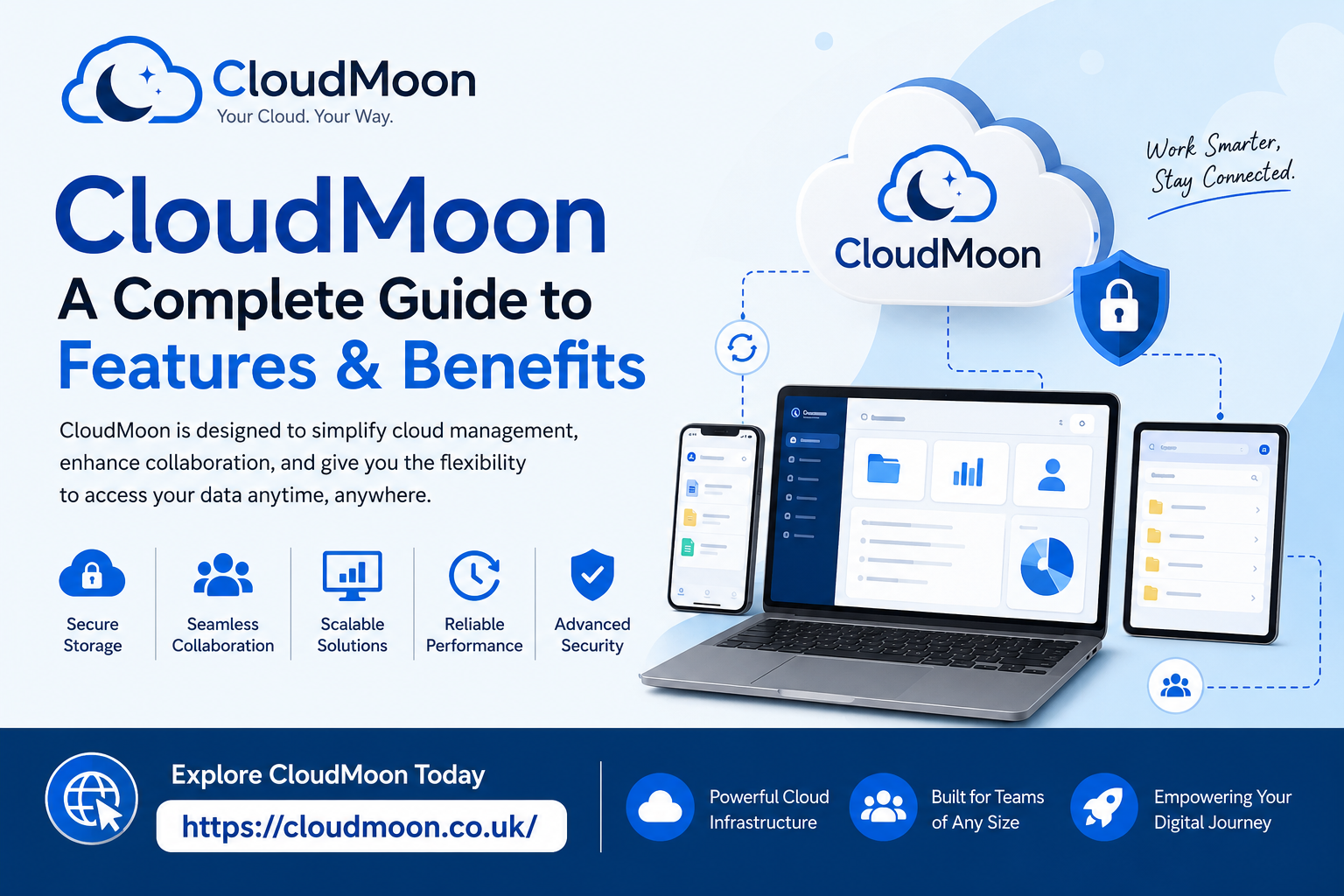
CloudMoon has become a topic of growing interest among individuals and businesses exploring modern cloud-based solutions. Whether you have recently come across the name or are actively researching its capabilities, understanding what CloudMoon offers is the first step toward determining whether it fits your needs.
Cloud platforms continue to reshape the way people work, collaborate, store information, and access digital services. Solutions like CloudMoon aim to simplify these processes by offering centralized tools that improve accessibility, flexibility, and productivity.
This guide explains what CloudMoon is, its primary features, potential benefits, practical applications, and best practices for getting the most from the platform. Whether you’re a beginner or an experienced technology user, this article provides a clear overview to help you better understand CloudMoon.
Key Takeaways
- CloudMoon focuses on improving cloud-based workflows and accessibility.
- It offers centralized tools that simplify collaboration and resource management.
- Organizations can benefit from improved flexibility, scalability, and efficiency.
- Understanding available features helps users maximize the platform’s value.
- Following best practices improves performance and long-term usability.
What Is CloudMoon?
CloudMoon is a cloud-based platform designed to support digital operations through online infrastructure, collaboration tools, and centralized resource management. Depending on its implementation, it can serve businesses, teams, developers, educators, or individuals who need reliable cloud services.
Rather than relying entirely on local hardware, cloud platforms allow users to access resources through an internet connection. This approach reduces infrastructure complexity while making information available from multiple devices and locations.
CloudMoon aims to make these cloud capabilities easier to manage while supporting everyday productivity.
Why CloudMoon Matters
Organizations increasingly rely on cloud technologies because they support remote work, digital collaboration, and scalable operations.
CloudMoon addresses several common challenges:
- Managing digital resources
- Sharing information securely
- Supporting distributed teams
- Improving workflow efficiency
- Reducing dependence on physical infrastructure
As businesses continue their digital transformation, platforms like CloudMoon become increasingly relevant for both small organizations and larger enterprises.
Core Features of CloudMoon
Centralized Cloud Management
One of the biggest strengths of CloudMoon is centralized management. Instead of working across multiple disconnected systems, users can organize important resources within a unified environment.
Potential advantages include:
- Easier administration
- Better organization
- Reduced duplication
- Faster access to information
Remote Accessibility
CloudMoon allows users to access cloud resources from different locations.
This flexibility supports:
- Remote employees
- Hybrid workplaces
- Business travel
- Cross-location collaboration
Users simply need an internet connection and authorized access.
Collaboration Tools
Modern teams rarely work alone.
CloudMoon supports collaborative workflows by enabling users to:
- Share files
- Coordinate projects
- Communicate efficiently
- Reduce workflow bottlenecks
Effective collaboration often leads to faster project completion and improved productivity.
Scalable Infrastructure
As organizations grow, their technology requirements also increase.
CloudMoon is designed to accommodate changing demands by supporting scalable cloud resources.
Benefits include:
- Easier expansion
- Better resource allocation
- Improved operational flexibility
- Reduced infrastructure limitations
Security Features
Security remains one of the most important considerations for any cloud platform.
Although implementations vary, cloud solutions commonly include features such as:
| Security Feature | Purpose |
|---|---|
| User authentication | Controls account access |
| Permission management | Limits access by role |
| Data encryption | Protects information during storage and transfer |
| Activity monitoring | Helps identify unusual activity |
| Backup options | Supports data recovery |
Users should always review the platform’s security documentation and configure settings according to their organization’s requirements.
Benefits of Using CloudMoon
Improved Productivity
CloudMoon helps reduce time spent switching between multiple systems.
Centralized resources allow users to focus more on their work rather than administrative tasks.
Better Collaboration
Cloud-based collaboration encourages smoother communication between departments, remote employees, and project teams.
Everyone works with the latest available information instead of outdated copies.
Greater Flexibility
CloudMoon supports modern work environments by allowing users to access resources across various devices.
Examples include:
- Desktop computers
- Laptops
- Tablets
- Smartphones
This flexibility supports work both inside and outside the office.
Easier Resource Management
Managing cloud resources becomes simpler when information is organized in one location.
Benefits include:
- Improved visibility
- Reduced complexity
- Faster updates
- Better organization
Long-Term Scalability
Businesses often outgrow traditional infrastructure.
CloudMoon provides the flexibility needed to support future expansion without completely redesigning existing workflows.
Common Use Cases for CloudMoon
CloudMoon can support a wide range of professional environments.
Small Businesses
Small businesses may use CloudMoon to:
- Organize documents
- Improve collaboration
- Centralize digital resources
- Support remote teams
Enterprise Organizations
Larger organizations often require scalable infrastructure capable of supporting multiple departments.
CloudMoon may help streamline administration while improving communication across teams.
Educational Institutions
Schools and training organizations increasingly depend on cloud technology.
Potential uses include:
- Learning materials
- Shared resources
- Faculty collaboration
- Student access
Freelancers and Consultants
Independent professionals benefit from having secure access to work from multiple locations.
CloudMoon can simplify project organization while improving client collaboration.
CloudMoon Compared with Traditional Systems
| CloudMoon | Traditional Local Systems |
|---|---|
| Accessible online | Limited to physical devices |
| Supports remote work | Office-dependent |
| Easier collaboration | Manual file sharing |
| Scalable resources | Hardware upgrades required |
| Centralized management | Multiple isolated systems |
This comparison highlights why many organizations continue transitioning toward cloud-based environments.
Best Practices for Using CloudMoon
Getting the most from CloudMoon involves more than simply creating an account.
Consider these best practices:
Organize Resources Clearly
Use logical folder structures and naming conventions.
This makes information easier to locate later.
Manage User Permissions
Grant access based on responsibilities.
Avoid providing unnecessary administrative privileges.
Review Security Settings Regularly
Enable available security features and update account settings periodically.
Strong passwords and multi-factor authentication, when available, improve account protection.
Train Team Members
Technology performs best when users understand how to use it effectively.
Provide onboarding materials and encourage consistent workflows.
Monitor Performance
Regularly evaluate:
- Storage usage
- User activity
- Resource allocation
- Workflow efficiency
Monitoring helps identify opportunities for improvement.
Challenges to Consider
Like any cloud platform, CloudMoon may present challenges depending on how it is implemented.
Potential considerations include:
- Internet connectivity requirements
- User training needs
- Security configuration responsibilities
- Data governance policies
- Integration with existing software
Planning ahead helps organizations minimize these challenges.
Tips for New CloudMoon Users
If you’re just getting started with CloudMoon, consider the following approach:
- Learn the platform’s core features.
- Organize your files from the beginning.
- Establish consistent naming conventions.
- Configure user permissions carefully.
- Enable available security protections.
- Train all users before large-scale adoption.
- Review workflows periodically.
Following these steps creates a smoother experience and reduces future administrative work.
The Future of Cloud-Based Platforms
Cloud computing continues to evolve as organizations prioritize flexibility, collaboration, and digital accessibility.
Future improvements across cloud platforms are expected to focus on:
- Better performance
- Enhanced security
- Simplified management
- Improved integrations
- Greater scalability
- More intuitive user experiences
CloudMoon is positioned within this broader shift toward efficient, cloud-first operations that support changing business needs.
Frequently Asked Questions
What is CloudMoon?
CloudMoon is a cloud-based platform designed to help users manage digital resources, improve collaboration, and support cloud-enabled workflows.
Who can use CloudMoon?
CloudMoon may be suitable for businesses, educational institutions, freelancers, project teams, and organizations seeking cloud-based resource management.
What are the main benefits of CloudMoon?
Common benefits include centralized management, improved collaboration, remote accessibility, scalability, and greater operational flexibility.
Is CloudMoon suitable for small businesses?
Yes. Small businesses often benefit from cloud platforms because they simplify collaboration and reduce dependence on local infrastructure.
Can CloudMoon support remote work?
Yes. Because it is cloud-based, CloudMoon enables authorized users to access resources from different locations using an internet connection.
How can users improve security on CloudMoon?
Users should implement strong passwords, enable multi-factor authentication when available, manage user permissions carefully, and review security settings regularly.
Does CloudMoon scale as businesses grow?
Cloud-based platforms are generally designed to support changing organizational needs, making it easier to expand resources as requirements increase.
Conclusion
CloudMoon represents the growing shift toward flexible, cloud-based digital environments that support collaboration, accessibility, and efficient resource management. Whether you’re exploring cloud technology for personal productivity or evaluating solutions for your organization, understanding the platform’s features and best practices is essential.
By organizing resources effectively, applying appropriate security measures, and adopting consistent workflows, users can maximize the value CloudMoon offers. As cloud computing continues to evolve, platforms like CloudMoon will remain an important part of modern digital operations, helping individuals and businesses work more efficiently in an increasingly connected world.